

Did Christian's Model Jesus After Mithras? (Rewrite)

Despite the mountains of research behind the historical reliability of the Gospels and their accounts of the resurrection, there is still a small fringe minority of scholars (and by and large, a lot of laymen) who claim that they modeled Jesus and the resurrection after ancient myths brewed up by previous religions and cults. Out of the many cults, one of the most popular and acclaimed originators of Jesus is Mithras. Mihtraism, which is a sect/offshoot of Zoroastrianism, was a very mysterious group that has left behind almost no written records from the time of Jesus for what they believed, practiced, or taught. All of the similarities to Jesus actually begin to appear in the centuries after Jesus and the Church's established doctrine. This indicates that the copying, contrary to TikTok university professors' claims, actually exists in the reverse, with Mithraism copying from Christianity.
So, how does Mithras compare to Jesus according to mystics? Some of the claims that will be dealt with here can be commonly found in internet memes or pictures that list a bunch of supposed similarities between the two without offering any support for those claims. Unlike the dishonest opinion of the "politically correct" culture, there will be support offered here, and a detailed explanation, to transmit truth, and not sensation. Shown below is a short list of the main claims made by these folks.
Mithras was born to a virgin mother on December 25th.
Mithras was a travelling teacher who would often perform miracles as Jesus did.
He has 12 followers/disciples who accompanied him.
He was sacrificed for world peace, just like Jesus was crucified.
Mithras was buried in a tomb, just to resurrect three days later on Easter.
Mithras promised his followers immortal/eternal life.
He was called Saviour, Redeemer, The Way, Truth, Good Shepherd, and The Light.
Mithras holy day was on sunday, during which his followers participated in a Lord's supper similar to Jesus breaking bread in Matthew 26, Mark 14, and Luke 22.
When browsing the internet, these claims may vary in wording, but the claims are practically the same. These are the most common claims about Mithras, but are they true? They stem from the broader claim that the resurrection accounts seem to resemble the myths of other religions, where a god died and rose from the dead. Both this general claim and Mithras will be dealt with in this article.
Does the Evidence Support The Claims?
For Jesus to be a copy of Mithras, at least one of these claims must be completely true. As we will shortly see, none of them holds any amount of water, submitting to fallacious reasoning in one fashion or another. With regard to Mithraism, there are three different versions from the three different cults we have records of, resulting in three different versions of Mithra. These include the Roman Mithras Cult, the Persian/Iranian Mithras Cult, and the Vedic Mithras (referring to the Hindu Vedas). Unfortunately, none of these versions compares to Jesus with any noticeable similarities. And the people who claim there are similarities are thinking of the Roman Mithras Cult, which has left no written records behind for us to examine. Because of this fact, the only amount of information we can access about them comes from second-hand sources and Archaeological artifacts that all post-date Jesus. In simpler terms, all records of the Roman Mithras Cult come after Jesus.
The acclaimed similarities (like the day of Saturnalia being on December 25th) would not arise until the second, third, and fourth centuries AD. It wasn't until the 4th century AD that December 25th was attached to the holiday of Sol Invictus, and inscriptions mentioning the day earlier than this all have inconsistent dates that do not fall on the 25th. Some state the day was in the fall, some fell in early December, but not late enough for the 25th. Therefore, Christmas was not copied from Roman holidays, as the evidence suggests it was moved to the date after Christianity was established. In the early 3rd century, around 204 AD, Hippolytus records the conception of Jesus in March and birth in December in his Commentary on Daniel. He comes to his conclusion based on calculations made from textual details within Daniel, alongside the belief that Jesus was conceived in March (See note 1).1
Also noteworthy is the fact that the Mithras cult was exclusively open only to men. “Moreover, the Mithras cult was exclusivist (open only to men), militaristic (involving codes of honour and purity regulations to prepare men for war), and closely dependent on Roman imperial support for survival. Claims that Christianity or its picture of Jesus was born out of Mithraism reflect almost no historical understanding of chronology, lines of influence, or true similarities and dissimilarities between the two religions."2
Was Mithras Born To A Virgin On December 25th?
It was extremely unlikely that Mithras was said to be born of a virgin. Almost all sources say the Roman version of Mithras was born out of a rock.3 In the other versions, Mithras is created as a full adult by Ahura Mazda (Persian/Iranian), in which there is no reference whatsoever to a virgin mother. For December 25th, Roger Beck says it is a lie:
“In truth, the only evidence for it is the celebration of the birthday of Invictus on that date in the calendar of Philocalus. Invictus is, of course, Sol Invictus, Aurelion’s Sun God. It does not follow that a different, earlier, and unofficial Sun God, Sol Invictus Mithras, was necessarily or even probably born on that day too”4
There is no surviving evidence from the Roman Mithras Cult's own sources, which are inscriptions and art, during the 1st-4th centuries AD that, without a doubt, link Mithras to a birth date of December 25h.
Was Mithras A Traveling teacher Who Performed Miracles?
There is no evidence that Mithras acted as a traveling teacher, a role that is often attributed to religious figures. The lack of historical records or credible accounts of Mithras engaging in activities typical of traveling teachers, such as preaching or spreading wisdom, brings into question this characterization. While the concept of a traveling teacher is significant in many religious traditions, there is no documentation supporting Mithras doing things similar to Jesus. Regarding miracles, these are commonly attributed to deities across various cultures and religions, not unique to Mithras. Miracles illustrate divine power but are too broad to establish specific comparisons between Mithras and other deities.
The lack of evidence for Mithras as a traveling teacher and the universal nature of miracles among deities suggest that drawing specific connections based on these aspects is problematic and simplistic at best.
Did Mithras Have 12 Disciples?
No version of Mithras has 12 followers. In the Persian version, Mithras has a single companion named Varvana, and in the Roman version, he has two named Cautes and Cautopatres. In the Vedas, Mithras is a co-deity with another named Varuna. Mithras represents the day, and Varuna night. The closest one can get to 12 is by taking into account the fact that he is part of the Adityas, or the sons of Aditi, which number around 7 or 8, depending on the source. But siblings are not comparable to the disciples.
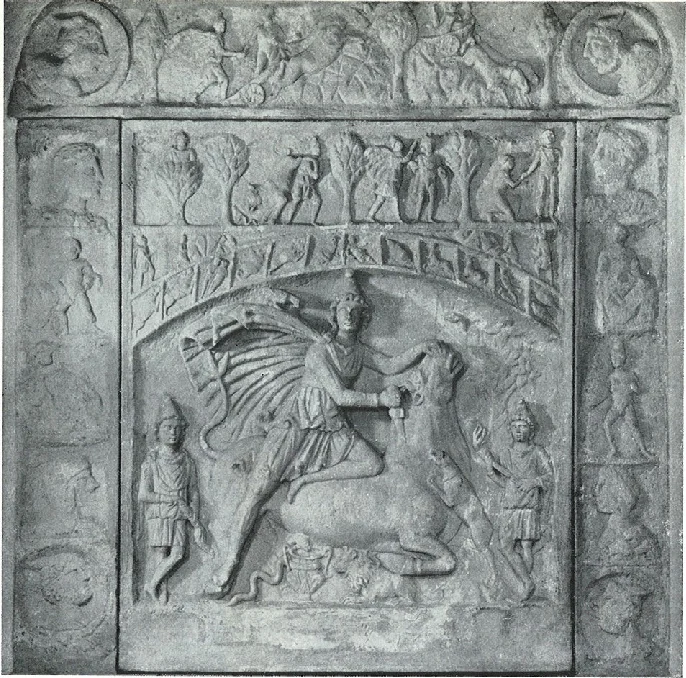
The idea that Mithras had 12 disciples comes from a misunderstanding of an inscription where Mithras has two pillars beside him that contain the 12 zodiac figures/symbols. Mystics see these symbols as 12 followers, which immediately warrants the conclusion that Jesus was copied from Mithras! Slow down, buckaroo, because these 12 figures are the furthest from disciples, as they are very obviously the 12 zodiac symbols. There is no mention in ancient Mithraic sources or archaeological remains of Mithra having twelve disciples. While Mithras is often shown surrounded by 12 symbols, these represent the signs of the zodiac and astronomical elements, not human companions. This inscription also post-dates the time of Jesus, so this "evidence" can be done with.
Didn't Mithra Sacrifice Himself Like Jesus?

There is zero evidence that Mithras sacrifices his own life for any sort of forgiveness. This claim originates from a misrepresentation of him killing a cosmic bull. In this story, the sun god sends a raven to tell Mithras to come and sacrifice a bull. In the Roman version, the bull wasn't sacrificed for forgiveness or peace, but to make the world out of its blood. There are no similarities between Jesus and the resurrection accounts of the Gospels at all. It's simply a misrepresentation of the cosmic bull narrative.
Was Mithras Buried In A Tomb To Resurrect Three Days Later On Easter?
This claim is simply repeating the age-old slogan that the resurrection accounts seem to resemble other ancient myths. There is no evidence that Mithras was buried in a tomb, or even resurrected. Since he never sacrifices himself, how was he buried and resurrected? Craig Blomberg notes that before Christianity, there were no narrations of a person physically dying and then rising from the dead in the same body. Jesus physically died and then rose again to that life in a glorified and restored body.
None of the ancient myths and stories of dying and raising gods refers to real human individuals known to have lived among the very people narrating the stories within their living memory.5

This claim comes from a piece of Graffiti that is speaking about the slaying of the Cosmic Bull. This evidence, dated to after 200 A.D. and reads: “And us too, you saved by spilling the eternal blood”. All Mithraic scholars agree that this is about the Bull that was slain. All narratives similar to the Gospels post-date the time of Jesus, leading to the opposite conclusion. Pagans copied from Christians after it rapidly spread across the Roman Empire.
Did Mithras Promise His Followers Immortality And Eternal Life?
This similarity is far too general to draw parallels. Practically all religions promise their followers some form of eternal afterlife, so by this same logic, all religions copied Mithras, and nobody is willing to stand with that. To make this claim is fallacious because the original cult members (only men) left no written records behind, so we have no way to know if there is even an afterlife that they believed in.
“There might have never been any ritual specific to the soul's journey after death.”7
There is no evidence that this was copied from Christianity, and to still hold to it is to become intellectually bankrupt.
Mithras Was Given Titles Such As Saviour, Redeemer, The Way, Truth, Good Shepherd, And The Light.
Mithras was never called any of these names, or any title similar to that given to Jesus. There is little more to say about this, as no sources whatsoever call him these. Mithras is actually given titles such as Deus Sol Invictus (unconquered sun god), Nabarze (victorious), Sanctus (holy), and Arimanus (from its Zoroastrian roots). This claim completely ignores the Jewishness of Jesus. He fulfilled the messianic prophecies that came from the prophets of Israel, the Jews. All of His titles found throughout scripture are tied specifically to Judaism. Christ comes from the Hebrew title for Messiah (Mashiach). Lord comes from the Hebrew word Adonai. The Son of Man is found in a prophecy about the Messiah in Daniel 7. Son of David refers to his family's bloodline coming from King David. The Son of God, coming from Psalm 2:7 and 2 Samuel 7:14. Emmanuel was a title meaning "God is with us" from Isaiah 7:14. The Good Shepherd comes from Ro'eh HaTov, originating from Ezekiel 34 and Psalm 23. The Rock comes from Deuteronomy 32, depicting Jesus as the foundation of our faith. Finally, The Light of the World reflects Jewish imagery of the Law, or Torah, and God as the light that leads men through it (Isaiah 9:2, 49:6).
None of Jesus' titles originates from pagan religions, as they are all heavily tied to His Jewish roots, as can be seen throughout the many Old Testament prophecies and typologies of Jesus. Jesus even says this Himself:
"For if you believed Moses, you would believe me; for he wrote of me. But if you do not believe his writings, how will you believe my words?” (John 5:46-47)
Mithras Had A Holy Day On Sunday, And His Followers Participated In A Lord's Supper Similar To Jesus Breaking Bread In Matthew 26, Mark 14, and Luke 22.
Mithras did not have a Holy Day on Sunday, but given that the first of the week was significant in most cultures, it is strong evidence that it was actually copied from early Christian traditions. All of the records of their day, being on Sunday, post-date the time of Jesus. There is no surviving, direct, first-hand written record from the Roman Mithras cult itself that explicitly states, "Sunday is our holy day" or "We hold worship services on Sunday".
Association with Sun Worship (2nd–4th Century AD): Mithras was identified as Sol Invictus (the Unconquered Sun). Adherents held Sunday sacred because it was the day of the Sun, and celebrated the birth of the Sun on December 25th, according to historical accounts of the Mysteries of Mithra from the centuries after Christ. So it is more reasonable that the Cult copied Christianity. The only way that statement leads to a Jesus copying the cult is when you want it to be that way, as no evidence points that direction, only when you manually move your fingers your own way. Michele Salzman even reports that the Cult's use of Sunday postdates the New Testament entirely! That is exactly what we would expect to find if these claims were as bogus as they are.
“There is also no evidence of a Lord’s Supper; any mention of this fabrication is from very late medieval texts that cannot be trusted as containing information that predates Christianity.”8
In fact, the majority of New Testament scholars (both secular and believers) agree that the resurrection accounts being on sunday was not something that was made up at a later date, or something stolen from other religions. The very pivotal event that birthed the Christian message and faith was the acclaimed resurrection appearances on that Sunday morning following (Acts 1:3-9, 1 Corinthians 15). Both leading New Testament scholars N.T. Wright and Craig Blomberg write extensively defending this position:
"The early Christians did not invent the empty tomb and the 'meetings' or 'sightings' of the risen Jesus in order to explain the faith they already had. They developed that faith because of the occurence, and convergence, of these two phenomena... To suggest otherwise is to stop doing history and to enter into a fantasy world of our own, a new cognitive dissonance in which relentless modernist... devises strategies for shoring it up nevertheless... the case we have presented that the tomb-plus-appearences combination is what generated early Christian belief, is as watertight as one is likely to find.9
"But Christianty's Jewish backgrounds and the much closer parallels with Jewish batpism and Passover meals more than adequately account for the birth of the Christian sacrements. Not until the second, third, and fourth centuries AD do any noteworthy parallels emerge..."10
The Big Mistake With The Pagan Claims
The #1 Mistake that internet mystics are committing is the Fallacy of Faulty Appeal to Authority. Specifically, 2 forms of this Fallacy. The Faulty Appeal To Popularity/Authority/ or Majority is when the argument is that a claim is true simply because another person believes it, and is used as some “credible” and “strong” argument. But the logical truth of this is as follows: The truthfulness of the claim at issue is not necessarily relevant to the popularity of the individual making the claim, but rather the substance of a counterargument. This still does not support that these claims are true, because when the actual evidence is looked at, Bill Maher and these others are simply ignorant, or deliberately lying about the truth. One side of the coin is understandable, but the other is rather questionable (maybe a bit more than rather). The Faulty Appeal to Majority is when a person argues that a claim must be true simply because most people believe it. We can do some diligence to learn from history as well:
“History is replete with examples of when the majority was wrong.” 11
Just as with many other instances, the claims that Christianity copied from paganism are simply wrong, no matter how many people believe it. Nonsense still means nonsense even when high-powered intellectuals are spouting it. That is a stark feature of truth; it is true for all people everywhere at any time, and its opposite is false for all people at any place and any time. This line of thinking would only work if truth is relative, but that in and of itself is a fallacy. The claim that truth is relative is a suicide statement. It is claimed that, while there are no absolute truths, the claim itself is the only knowable absolute truth: that there is no knowable truth. It is modern new age, and new thought ideologies and worldviews like these that we must be aware of when discussing issues such as these. You may remain unconviced, but know that it is not from any amount of sound argumentation or evidence, you are just exerting your Right to be Wrong.
(1) (There was a common belief that a prophet died on the day of his birth, called the "age of perfection". Since Jesus died on March 25th, according to early Christian writers, they simply counted 9 months to December 25th. See https://www.ptequestionstoeden.com/post/christmas-is-not-pagan)
(2) (Craig Blomberg, The Historical Reliability of the Gospels: Second Edition, pg 138)
(3) (We know this by some archaeological evidence, with the most iconic imagery coming from relief sculptures found in mithraea (temples), such as the third-century relief from the Mithraeum of Köln, also David Ulansey and Commodian, Instructions)
(5) (Craig Blomberg, The Historical Reliability of the Gospels: Second Edition, pgs 138-139)
(7) (Roger Beck, The Religion of the Mithras Cult in the Roman Empire [2006])
(9) (N. T. Wright, Resurrection of the Son of God, pg 707, quoted in Blomberg, The Historical Reliability of the Gospels, pg 143)
(10) (Craig Blomberg, The Historical Reliability of the Gospels: Second Edition, pg 138)


Comments