

Senenmut And Moses: Evidence For The Exodus

Updated: May 4
Is the Bible's historical record accurate? Many skeptics go after the Bible's record, claiming that there is no evidence for the Exodus, or even the existence of Moses. They point to the lack of the Exodus in the Egyptian records during the 13th century BC, or around 1225 BC. This later date for the Exodus comes from the reference to Pithom and Ramses being built by the Hebrew slaves (Exodus 1:11), with some pointing at Ramses II as the Exodus Pharaoh. But there is much more circumstantial evidence within Egyptian records for an earlier 1446 BC date. In the last article on Exodus 1, we examined 20 discoveries that seem to point towards the earlier 15th-century date. Some of these included the very mummies of the Pharaohs leading up to the Exodus, even one of them bearing scars from a skin disease that looks a lot like the boils that God struck against Egypt.
This article will expand on the previous one by further examining evidence for the Existence of Moses from the very records of Egypt during the 15th century BC. We will be focusing on a specific figure, believed by some to be Moses. But before we begin with this figure, a little rundown of the Exodus and the possible Pharaoh of that time.
The Pharaoh Of The Exodus
The book of Exodus is full of familiarity with Egyptian beliefs and practices, extremely well done. In fact, the Pentateuch itself is so familiar with Ancient Near Eastern practices that it could not have been written by later Israelites after or during the Babylonian Exile. This makes perfect sense since Moses was raised in Egyptian royalty, and therefore would have been raised in these customs. Furthermore, the New Testament tells us that Moses was educated in Egyptian royalty during Stephen's speech in Acts 7:22. So it would make perfect sense, if the Bible is being honest, that the writer of Exodus would be so familiar with Egyptian customs. It also makes more sense that Moses would have been able to write, since writing systems were already developed millennia before Moses was even born, and he was raised in royalty by the Pharaoh's daughter.
But there is one figure in the records of Egypt whose life aligns with the life of Moses as outlined in the Bible. Scholars like Scotty Roberts and Christipher Eames have claimed this figure to be the Moses of the Exodus. This figure fits into the 1446 BC date for the Exodus. This later date comes from the Bible's chronology in 1 Kings 6:1, where we are told that Solomon built the temple 480 years after the Exodus event. Historians agree that Solomon built the temple around 967 BC, and going back 480 years, we get to the 1446 BC date for the Exodus. This means that the Hebrews would enter Canaan around 1406 BC. The Bible's own chronology seems to place the Exodus in the mid 15th centruy BC, and this agrees with other verses like Judges 11:26 and 1 Chronicles 6. So if we can get a general date for the Exodus in the mid 15th century BC, who was the Pharaoh of the event?

The Amarna Letters, found in Tell el-Amarna near Cairo by William Flinders Petrie in 1891, contain some 150+ clay tablet letters from Canaanite kings complaining about a rebellious nomadic group called the "Haribu."
“As outlined in 'Who Was the Pharaoh of the Exodus?', following a high chronology timeline puts the pacifist Amarna period pharaoh, Amenhotep iv/Akhenaten, as the pharaoh during the conquest of Canaan (a pharaoh also notable for his upheaval of Egypt’s polytheistic religious system and rejection of the name Amenhotep)”2

This would place Amenhotep IV (beginning around 1353 BC) as the ruler during the Canaanite conquest, and Amenhotep III (ruling from around 1391-1353 BC) as his predecessor as the Pharaoh of the wilderness wandering. This is also the period when some of the earliest inscriptions mentioning Yahweh and His nomadic worshippers appear (the Shasu of Yahweh Inscription). Amenhotep III's father, Thutmose IV (1401-1391 BC), would therefore be the Pharaoh following the Exodus Pharaoh. Thutmose IV was not a legitimate firstborn ruler, as evidence seems to suggest he erected the Dreme Stele in front of the Sphinx in order to claim the throne. In this Stele, Thutmose IV claims to have been visited by the gods and declared the next Pharaoh of Egypt, which gave him justification for taking the royal position (See note 1).

The ruler before Thutmose IV, Amenhotep II, would thus be the Pharaoh of the Exodus (reigning from 1453-1401 BC).3 This is also supported by the mummy of him that we have, discovered in 1898.
His Mummy has scars from what seems to be boils/tubercles from a skin condition, aligning with the sixth plague God struck on Egypt (Exodus 9). His tomb also contained a small room with the mummy of his young, firstborn son, who died before he could follow his father's footsteps, just as the Bible records in the tenth plague. Amenhotep II's father, Thutmose III, had a second son, Amenemhat aswell.
The commonly held belief is that Ramses II was the Pharaoh of the Exodus in the later date of 1225 BC. Yet there are ancient historians like the Egyptian Menetho, who calls the Pharaoh of the Exodus by the same Greek name, Amenophis, the Greek version of Amenhotep. “Then there are the theories of the early historians. Josephus, the first-century c.e. Jewish author, believed it was one of the pharaohs named Thutmose. Manetho, the third-century b.c.e. Egyptian historian, identified him as one of the Amenhotep. The first-century c.e. Roman historian Tacitus identified him as Bakenranef.“2
Amenhotep II: The Exodus Pharaoh (1453-1401 BC)
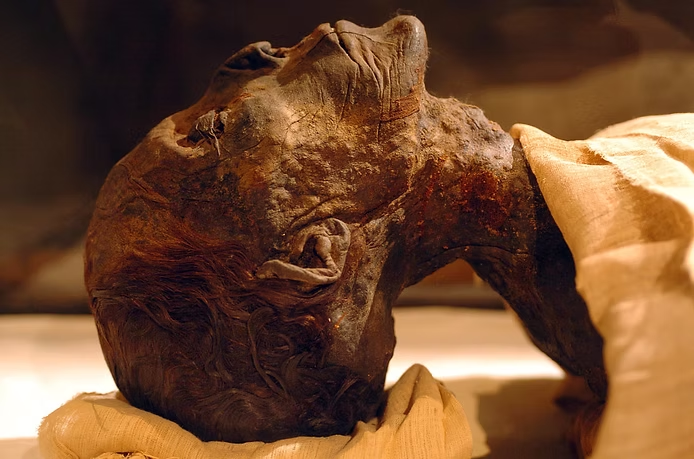
Amenhotep II began his rule with several military campaigns and quickly gained a reputation for being a cruel, brutish, and harsh ruler. But the second half of his reign lacks these characteristics. Things seem to have at least steadied out and calmed down, because we don't have many records from this latter period of his reign. The only inscription we have from him during this quiet period is a warning about dealing with foreign peoples:
“...The foreigners; guard yourselves against their people and their magicians…”4

Once again, the mummy that we have of him has scars from what seems to be the boils mentioned in Exodus 9 as the sixth plague. Another inscription we have from him is the Memphis Stele (see above), where he records leading multiple raiding parties throughout Canaan to capture some 101,128 slaves. Compared to the many campaigns led by his father, Thutmose III, why would he need to gather so many slaves out of nowhere? It seems like Amenhotep II had a large number of slaves disappear, requiring him to lead these raids into Canaan, exactly what the Bible records.
Thutmose III (1486-1450s BC)
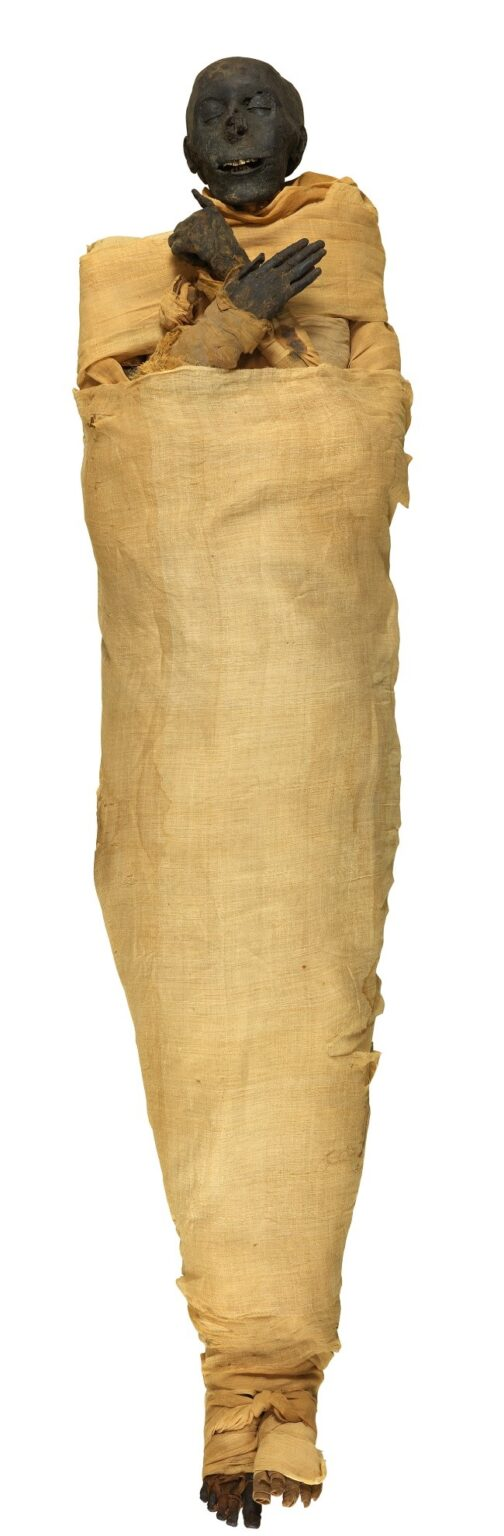
Amenhotep II's father was one of the greatest military rulers of all of Egypt, Thutmose III. He reigned for around 50 years, and with a high chronology, his reign would be before the 1446 BC Exodus. This matches the timeline of Moses leaving Egypt for Midian for 40 years, coming back to a new Pharaoh, Amenhotep II. Thutmose III's stepmother, Hatshepsut, plays a big role in the Biblical narrative, and the Egyptian records again align nicely. Thutmose III was born to one of Thutmose II's lesser wives, Iset.5
Thutmose III would have been the Pharaoh when Moses murdered the Egyptian who was beating a Hebrew slave (Exodus 2:11-15). But going back in time about 40 years, his father, Thutmose II, died rather early in his reign. This left Thutmose too young to rule, making his stepmother, Hatshepsut, the Pharaoh until he was of age.
"Then Pharaoh’s daughter went down to the Nile to bathe, and her attendants were walking along the riverbank. She saw the basket among the reeds and sent her female slave to get it. She opened it and saw the baby. He was crying, and she felt sorry for him." (Exodus 2:5-6)
Hatshepsut (1512-1486 BC)
She was one of the most powerful rulers Egypt had ever seen. She ushered in a short era of peace and wealth for the empire, and some of her inscriptions describe her as unusually compassionate and kind to foreigners. This lines up with how the Bible describes Pharaoh's daughter adopting and raising a foreign baby, Moses. Something unheard of in ancient Egypt happens during her reign, though.
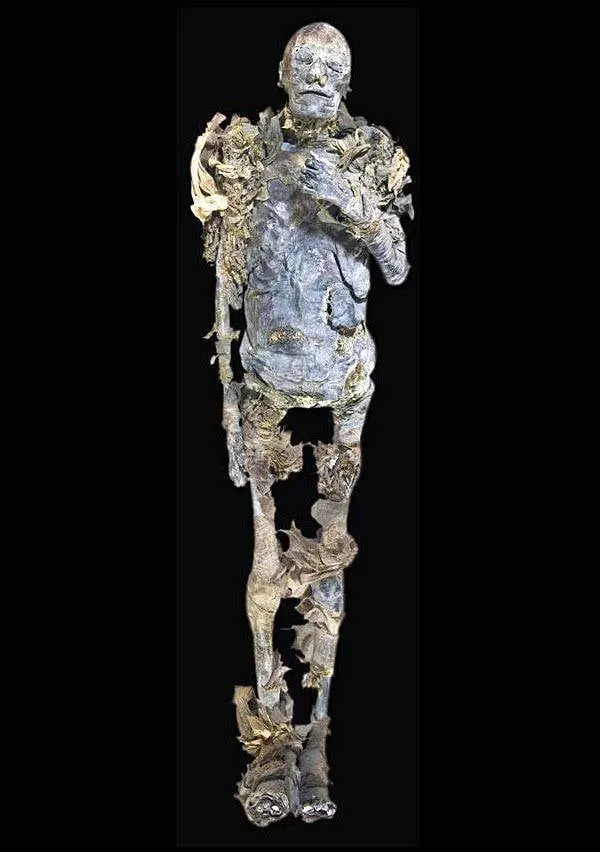
Around 1479 BC, a man of low-class status suddenly rose to one of the highest royal positions besides the Pharaoh. And this man is the subject of this article. But harkening back to Moses, the Bible records that he lived 120 years (Deuteronomy 34:7). His life was split up into three main periods; he spent 40 years being raised in Egypt and rising in royalty, 40 years spent in Midian after he murders an Egyptian, and 40 years leading the Hebrews through the wilderness and to the promised land in Canaan (Exodus 7:7, Numbers 14:33, Deuteronomy 29:4). Moses then dies right before the Hebrews enter Canaan in 1406 BC (Deuteronomy 31:2). This would place the birth of Moses around 1526 BC, during the reign of Thutmose I (1532-1516 BC), the Pharaoh who ordered the killing of the Hebrew babies to the midwives (Exodus 1:16).
Thutmose I had two children, Hatshepsut and Thutmose II. He would make them marry each other to secure the royal lineage, a common practice in the ancient world.
Thutmose II (1513-1500 BC)

Thutmose II hasn't left any important records behind, due to his being weak, perhaps suffering from a disease, and dying not long after his reign began. Thutmose II's only son, Thutmose III, was only two years old at the time, far too young to rule the empire. While Thutmose III went and prepared for 20 years, Hatshepsut would take over as Pharaoh, bringing an era of peace and wealth to Egypt. She was described as kind-hearted, described with a "heart full of love" for foreigners. Some inscriptions speak of her kindness and gentleness towards people, so it would make sense for her to perhaps take up a foreign child and raise him to a princely position.
Lo and behold, Egyptian records describe a situation just as that. During Hatshepsut's reign, a peasant-class citizen was elevated to royalty out of nowhere, and this is where Senenmut comes in.
Senenmut (1492-1480s BC)
Senenmut first appears in Egyptian records during Thutmose II's reign, but begins his status elevation right at the start of Hatshepsut's reign, around 1490s-80s BC, and abruptly disappears around the 1470s or 1460s-50s, depending on the chronology, without explanation.
“Let’s cut to the quick. Senenmut, favored courtier to Pharaoh Hatshepsut, is the very same man we know as Moses...”6
By the time he vanished, he was a first-class citizen next to Pharaoh, serving in an Advisor position. He was very close to Hatshepsut, being involved with education and military duties. He was given about 100 different titles, ranging from Advisor, Prince, Overseer of the Prophets of Montu in Hermonthis, Great Treasurer of the Queen, to the Chief Steward of the King's daughter. He even homeschooled Hatshepsut's only daughter, as well as conducting almost all of the work for the Pharaoh. He was also deemed the Wearer of the Rotal Seal.

His name, "Senenmut," means "Mother's Brother," or "Brother of Mut," and some scholars point out that this title highlights his close relation to his stepmother, Hatshepsut, even making him her adopted son. “In essence, it was a title elevating a son to the status of equal with his mother, allowing him to claim equal status of ‘brother to the gods’ with this pharaonic parent.”6 He began his career as a soldier, leading campaigns and raids in Kush to the south, in modern-day Ethiopia. Josephus also mentions Moses leading military campaigns in Egypt,7 but it was not until Hatshepsut began her rule that his status became elevated to Advisor.
But if we are looking for evidence of Moses, shouldn't we be searching for someone named Moses? After all, isn't the name Moses Egyptian to begin with? This is faulty, and Kenneth Kitchen argues that the name Moses, most likely pronounced Mashu (opposed to the Egyptian Mose), which means "one drawn out" in Hebrew. Eventually, the name became Moshe, meaning "he who draws out," leading to the modern English rendering of Moses. So, although the root of the name may be Egyptian (ms meaning "son"), the name itself is a Hebrew creation, and this is not suprising of the Hebrews spent centuries in Egypt as slaves. So Moses (Mashu) was a Hebrew name, probably given to him by his birth mother; his stepmother, Hatshepsut, would most likely have been (1) unaware of this Hebrew name at the time, and (2) offered him a new Egyptian name, or title/nickname that would better reflect his adoption into royalty. So we should not totally expect to find the name Moses directly stated in Egyptian records; instead, we should look for someone who has the life and circumstances that match the Biblical record. It would therefore not be surprising to find that this person would not have a Hebrew name, but an Egyptian one. And this position has further support that will be discussed shortly.
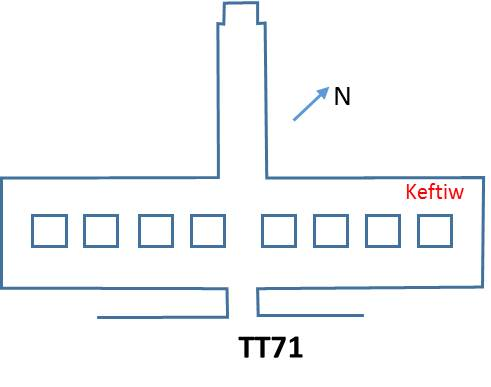
Some historians say that Senenmut became the second most powerful person in Egypt, with no records of him having a wife or children, which is unusual for an Egyptian Elite. He was also an architect who oversaw the building of Hatshepsut's temple at Deir El-Bahari. Moses oversaw just about every structure the Israelites built, and in Exodus 25, he even describes detailed instructions for building the Tabernacle, even hiring skilled craftsmen to do the labor. In this respect, Moses seems to have had an architectural background from his education in Egypt (Acts 7). Senenmut also had two tombs prepared for him, one in the Tombs of the Nobles that has a chapel (TT71), and the other located on the side of Dier El-Buhari (TT353) that contains the first star map in Egypt, which is further evidence of this figure's education that aligns with Moses.

Both of these tombs were abandoned before they were finished, even contained the tools that were used in their construction. Both of them had unfinished burial chambers. After this period of overseeing these tombs, records of Senenmut vanish without an explanation. Senenmut (also called Senmut) was a low-class citizen who was raised to the highest royal position starting with his stepmother's reign. He led military raids and oversaw building projects that included his mother's temple/tomb. He also oversaw his own tombs, but then, suddenly, construction halted, and records of him disappeared. His vanishing lines up very well with Moses. The last records of Senenmut place him in about the 16th year of Hatshepsut's reign, around 1479 BC. After he disappears, there is evidence that inscriptions were destroyed and his tombs vandalized. The same happened to Hatshepsut's inscriptions and structures. Egyptian Pharaohs often did this to previous elites that they disliked in order to "erase" them from social memory, boosting their own reputation as a result. Much like if someone had a reason to erase Senenmut from Egyptian records, as they disliked him for some reason.
Moses
Moses was raised into Egyptian royalty by Hatshepsut, Thutmose I's daughter (Exodus 2:1-3). Moses' birth mother placed him into a basket in the Nile, being found by Pharaoh's daughter, and raised as her son. So Moses grew up with access to the highest levels of Egyptian education (Exodus 7:22), culture, customs, and power from an early age (possibly being raised alongside Thutmose III). Josephus and Philo of Alexandria mention that Moses had a different name in Egypt, and that Moses was the name he used with the Israelites only. If this is true, then we shouldn't expect to find a specific record in Egypt bearing the name Moses. Rather, we should be looking for a person who matches what the bible records. If there is nobody who matches the Biblical record, then there is no evidence within their own writings of Moses. But, as we have seen, Egyptian records describe a person whose life aligns very well with Moses, during the period of time with the most circumstantial and archaeological evidence to support it.1

So, what are the similarities between Moses and Senenmut? Both Senenmut and Moses oversaw complex and grand architectural projects, which would place Senenmut near Hebrew slaves right at the time of his disappearance, overseeing his tomb construction. Both were in positions of power, Senenmut leading building projects, military campaigns, and being Advisor for Pharaoh; and Moses displaying leadership skills organizing the Torah and leading the newly formed Israelite people in the wilderness, both exhibit leadership, authority, and organization skills of an Elite. Both of their records claim to have them rising from the peasant class to one of the highest royal positions next to the Pharaoh. They also utilized their skills in revolutionary ways for their times.
Since Exodus claims that Moses saw a Hebrew slave being beaten, it would make sense if Moses had an administrative role in a building project, in direct proximity to slave labor. We are then told that he flees Egypt to Midan, and the timeline places this right around the time that Senenmut vanishes from Egyptian records. And this is further corroborated by the writings of the Greek Geographer Strabo:
“Among many things believed respecting the temple and inhabitants of Jerusalem, the report most credited is that the Egyptians were the ancestors of the present Jews. An Egyptian priest named Moses, who possessed a portion of the country called Lower Egypt, being dissatisfied with the institutions there, left it and came to Judea with a large body of people who worshipped the Divinity."8
If the proposed date for Moses' birth in 1526 BC is correct, then he would have been around 40 years old in 1486 BC, when Exodus says he murders the Egyptian and flees to Midian. This fits exactly into the window of time between the last records of Snenemut, sometime around 1479 BC, and the vandalism of his sites and records following. Here is a timeline I made to help visualize everything that has been covered.

(4) (The Stela of the Victory Usersatet)
(6) (Scott Alan Roberts and Dr. John Ward, The Exodus Reality)
(7) (Against Apion, 1.26)
(8) (Strabo, Geography, Lib. xvi., C.2)


Comments