

The Nuzi Tablets

Archaeology is a very important field of study for supporting the things that we see in the Bible. Although it does not prove without a doubt that the Bible is true, it does tell us that the records within are most likely accurate records of ancient men. Artifacts that are found at dig sites can clear up some of the strange situations we find in scripture that are hard-to-understand from our modern perspective. They can also make passages that seem made-up and odd make sense in the context of the broader customs of the Ancient Near East. Today, we will review a finding that has shed light on the customs of the Patriarchs in Genesis. This discovery lends some massive support for the reliability of the biblical record, and furthermore, the reliability of Jesus Christ. Found in a giant dirt mound in modern-day Iraq, some 5,000 ancient tablets were found that clear the fog on some of the circumstances found in the early books of the Pentateuch.
The Nuzi Texts

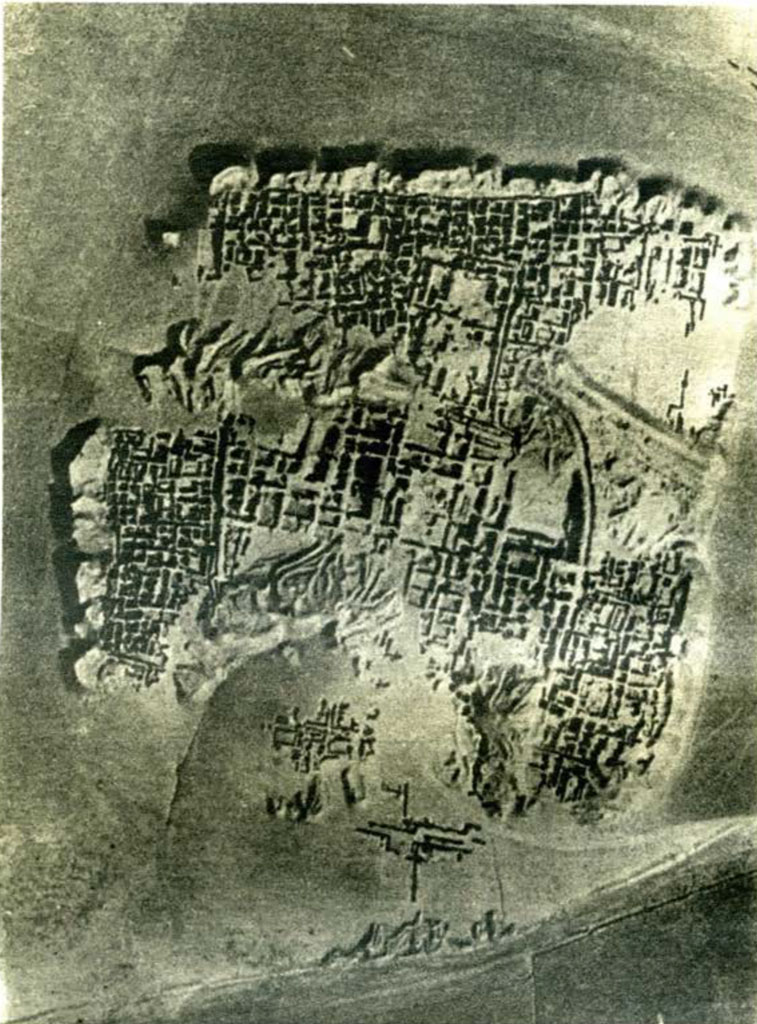
The ancient site of Nuzi, near Kirkuk in modern-day Iraq, by the Tigris River, saw its highest points in the 14th and 15th centuries BC. Flourishing in the second millennium, the city of Nuzi was under the control of a people group called the Hurrians. It was originally called Gasur, but in 1900 BC, the Hurrians would overthrow it and rename it Nuzi. The Nuzi Tablets are clay tablets written in Akkadian Cuneiform and housed in the Oriental Institute Meusem, Harvard Semitic Meusem, and the Iraq Meusem in Baghdad. Serious digs at Nuzi would start in the 1920-30s that would reveal a large archive in a house that contained some of these tablets. The dig took place at the Yoghlan-Tepe Tele. A tele is a large dirt mound, formed by the repetitive rebuilding of cities throughout human history. Almost all ancient cities are now teles, and they are kind of like a giant wedding cake, with different layers from each era's destruction. Different objects found in these layers, like tablets, pots, cups, tools, or other random objects, are used to (1) date each layer, and (2) aid in figuring out what was going on during each layer's time period.
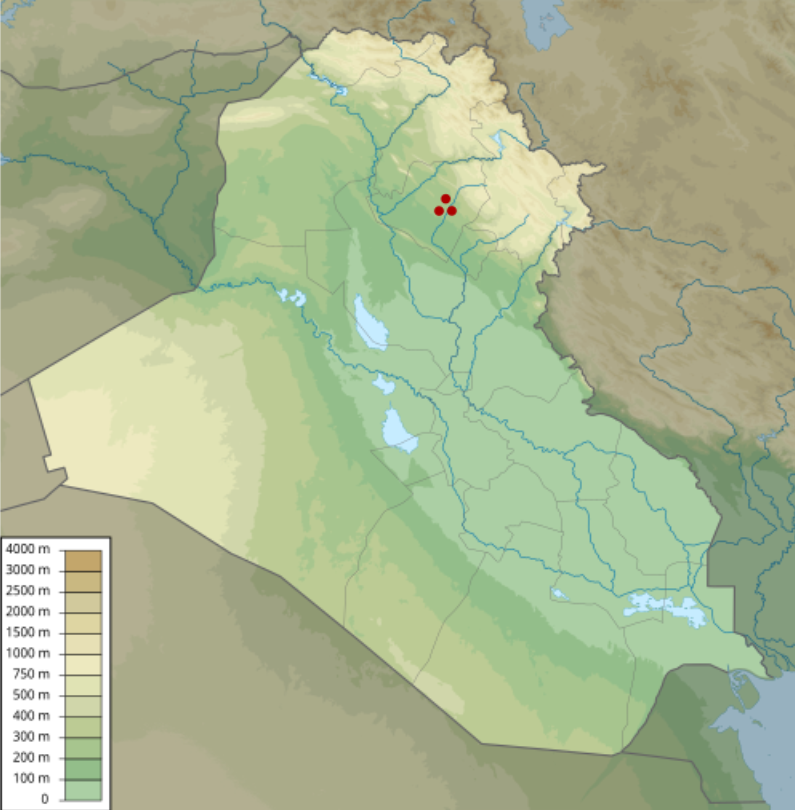
Some of the tablets found at Nuzi date earlier than the Hurrians, but most of them date to their time in the city. They deal with social, economic, legal, and administrative matters within Nuzi, most of which are about a single family. They shine light on the customs of the Patriarchs in Genesis. Things like selling your birthrite, not being able to revoke a birthrite, and gifting servants to a married man. They show that the Bible is simply recording the customs of the people at the time.1
The Discovery of the Nuzi Texts
Cuneiform tablets from Nuzi were found as early as 1896, but they caught the attention of Archaeologists in 1925 after Gertrude Bell noticed them floating in the Baghdad markets. Not long after this, Edward Chiera from the University of Pennsylvania would assemble a team to begin excavations at Yoghlan-Tepe. The dig would last until 1931, wherein they would unearth about 5,000 tablets recording Ancient Near Eastern customs. During the period between World War 1 and 2, Chiera's team would move into Nuzi to begin their work. Ever since then, the unstable struggle for power in Iraq has made it extremely difficult for archaeologists to even get into the area.
The language the tablets were written in was the diplomatic language of the day, Akkadian, kind of like how English is the international language today. They were written in cuneiform, which is the earliest known system of writing to develop in ancient Mesopotamia around 3200 BC. It originates from the Latin word Cuneus, meaning "wedge-shaped," and involves using a stylus made of reed to make wedge-shaped imprints in soft clay tablets. It uses combinations of these wedges to form syllables that spell words with specific meanings. It was widely used in the ancient world for trading, recording, inventory, law, and later uses include literature. The tablets were later baked to become hard and durable. The tablets found at Nuzi had to be baked after recovery because they were found unbaked. The tablets also make mention of a people group called the Hurrians, already mentioned.
Why Are They Significant?
The Nuzi Tablets are crucial for understanding the customs of the Patriarchs in the book of Genesis. When Abraham left Ur around 2100 BC, he went to Haran, which was located near the homeland of the Hurrians. The city of Haran had trade connections with the Hurrians, and thus, cultural customs would mix, and each side would take something from the other. It makes sense that the Patriarchs would have retained some of these customs.2 The Nuzi Corpus records a situation that parallels when Esau sold his birthright to his brother Jacob for some food in Genesis 25. Here, a man traded his inheritance in exchange for three sheep.3 It also upholds a blessing as a binding will, which also explains why Isaac wasn't able to revoke it when Jacob received it from Esau under deceitful circumstances.
The Horites
The Pentateuch mentions a people group called the Horites. Genesis 14:6 lets us know that the Horites would be defeated by Chedorlaomer and his armies in what would eventually become the nation of Edom. The Old Testament also notes that the Horites were governed by chiefs in Edom and that Esau's descendants would defeat them (Genesis 36:20-30; Deuteronomy 2:12,22). Before the Nuzi Tablets were found, the Horites (Chorim, חֹרִי, in Hebrew) were almost unknown outside of the Biblical mentions. But the Nuzi Tablets show evidence of them. PhD Archaeologist Scott Stripling notes that the Horites and Hurrians are the same people group.4
"Discovering the important role the Hurrians/Horites played in ancient history has convinced researchers to abandon the inaccurate etymology “cave dweller” assumption. Archaeological evidence now indicates that the Hurrians/Horites were a very advanced people who were both international merchants and expert metalworkers, especially proficient in smelting copper and bronze, which probably explains why some appear in the Bible around ancient Edom where copper ore was abundant."2
From archaeological evidence at other sites in Edom, the Horites/Hurrians were metal workers. Sites like Khirbat En-Nahas, where metal mining and smelting took place, are probably the site where the Hurrians settled, according to the Biblical text. According to Stripling, these people would combine with the Ras people to form the Bronze Age Mittani Empire, which later fell to the Hittites in 1350 BC. The Horites were once thought to be fiction, made up by ancient Israel. But the Nuzi tablets have proven the Bible to be talking about real people. Better yet, when we go to where the Bible says, we find evidence of what it records.

Calling Your Wife Your Sister
Another Ancient custom clarified by the Nuzi Tablets is found in Genesis 12:10-20, 20:2-6, and 26:1-11. In these passages, Abraham and Isaac introduce their wives' foreign rulers as their sisters. The Nuzi Tablets show that the Hurrians saw marriage as the closest bond between a man and a woman, so much so that a new bride obtained the title of both sister and wife, which are used interchangeably in the tablets. Therefore, Abraham and Isaac were unclear when they called their wives sisters, not directly lying. Even in Egyptian poetry, brides were called "my sister." Abraham and Sarah were half-siblings, and Isaac and Rebekah were cousins.2
Inheritence Adoption
One of the customs at Nuzi was childless couples adopting sons who would receive their inheritance in exchange for caring for the adopted parents when they were in old age. But if a biological son was born, the inheritance would go to him, which sheds light on Abraham adopting Eliezar in Damascus to receive his inheritance after Sarah was barren in Genesis 12:2-5.

"From the Nuzi tablets we know that it was customary for a childless couple to adopt a “son” who looked after his foster-parents and in return inherited from them. This arrangement could be reversed to a certain degree if an heir was subsequently born."5
House Gods
They also put some context into the scenes where there are quarrels with household gods. This clears up the situation where Laban was more concerned with losing his household gods than his livestock. The Nuzi Tablets illuminate the importance of the terephim to ancient people, which Rachel stole from her father Laban in Genesis 31:31-35. Terephim were most likely images of dead relatives that were used in ancestor worship. The person who had possession of them were head of the family. Laban had other sons who were rightful heirs to their father's terephim, so when Rachel stole them, this was seen as a serious offense against her family. A married daughter's husband was also in the ring of possible heirs to the terphim, so Rachel may have also been trying to obtain an inheritance of her father's estate for Jacob.
They also discuss that if a marriage remained childless, the wife would introduce a substitute wife, often a servant, to bear her husband's children. Sarah did this exact thing when she offered Hagar to Abraham, and so did Racheal with her servant Bilhah. The same practices took place at Nuzi.
Conclusion
The tablets found at Nuzi shine some light on the customs that we see the Patriarchs partake in within Genesis. Tablets like HSS V no. 67 contain legal contracts containing adoption contracts where the adopted son would gain the foster parent's inheritance. Other related tablets record the adopted son receiving the family estate, potentially excluding other heirs a couple may have. These parallel Genesis 16 and 30, where the same practices are performed. They also document the sale of inheritance goods and rights for smaller tangible goods, such as some sheep. This parallels when Esau sold his birthright for some food when he was extremely exhausted after going on a hunt. HSS V no. 67 also records transactions between brothers selling their inheritance shares in exchange for livestock. One specific Nuzi tablet notes that "Zinidi sold his inheritance rights to Tuḫia for three sheep". These offer support to the historical reliability of the Old Testament and the resurrection of Jesus Christ.
Time and time again, the Bible stands its ground when we sink our shovels into the soil. These tablets, along with the other evidence presented in Biblical Archeology here at ptequestionstoeden.com, continue to form a very strong case that the Bible contains an accurate historical record. Take some time to open your Bible and read through the passages mentioned in this article. Maybe share the situations and their relation to the Nuzi Tablets with a friend, family member, or Bible skeptic. And may God Almighty guide you to the truth, the way, and the life, Jesus Christ.
(1) Crossway, ESV, The Archaeology Study Bible, Pg 48
(3) E. A. Speiser in Annual of the American Schools of Oriental Research (AASOR) 10 (1928/9), No. 2.


Comments